
How to Prevent Google Ads Campaign Suspensions in 2026
 admin
admin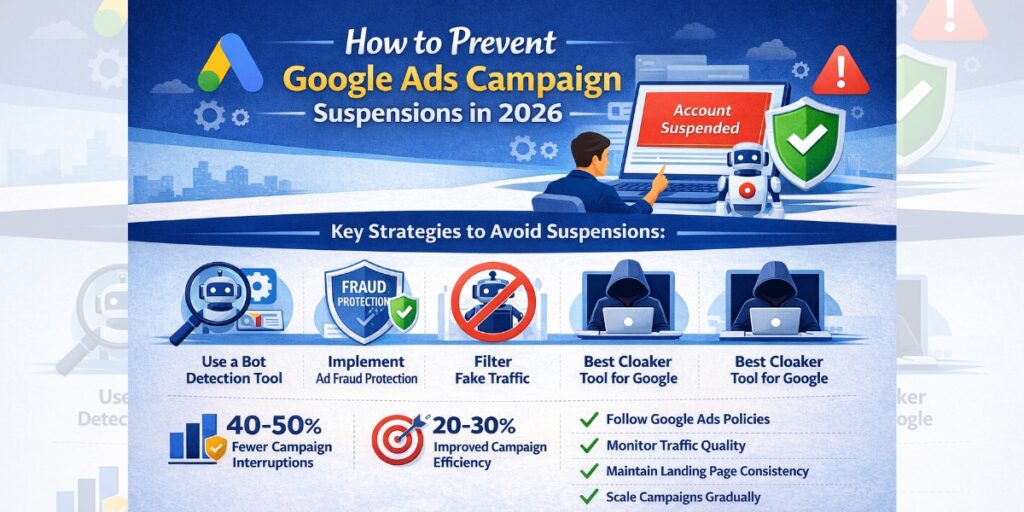
Running successful campaigns on Google Ads is becoming more challenging every year. Industry reports suggest that nearly 25–35% of advertisers face at least one campaign suspension annually due to policy violations or suspicious traffic behavior. To reduce these risks and maintain stable advertising performance, many marketers now use advanced monitoring solutions like ClickStopper to analyze traffic quality and protect their campaigns.
If you run affiliate campaigns, eCommerce ads, or lead generation campaigns, preventing suspensions should be a top priority. In 2026, Google’s advertising system relies on both automated algorithms and manual reviews to analyze ad copy, landing pages, and visitor activity. Advertisers who monitor traffic behavior and maintain compliance often experience 40–50% fewer campaign interruptions compared to those who ignore traffic monitoring.
Understanding Why Google Ads Campaigns Get Suspended
Google Ads continuously scans campaigns to ensure advertisements follow platform policies and provide a safe experience for users.
Campaign suspensions often occur when the system detects warning signals such as:
- Misleading or exaggerated claims in ads
- Landing pages that do not match ad messaging
- Suspicious redirects or hidden scripts
- Unusual click patterns
- High volumes of automated or low-quality traffic
According to digital marketing studies, more than 20% of account reviews are triggered by abnormal traffic behavior, especially in competitive industries like finance, supplements, and affiliate marketing.
Understanding these triggers allows advertisers to build safer campaigns and reduce suspension risks.
The Growing Problem of Invalid Traffic
Invalid traffic has become one of the biggest challenges in online advertising.
Research indicates that 15–30% of all digital ad clicks globally may come from non-human sources, including bots, crawlers, and automated scanning tools. These bots often attempt to collect marketing data, analyze landing pages, or trigger automated ad interactions.
Many automated visitors hide their identity using VPN services or rotating proxy networks. This allows bots to appear like real users and repeatedly interact with advertisements.
When advertising platforms detect unusual click behavior or traffic spikes, campaigns may be flagged for review. Because of this, advertisers increasingly rely on strong ad fraud protection systems to monitor visitor activity and reduce suspicious traffic signals.
The Importance of Traffic Monitoring
Monitoring traffic quality plays a major role in preventing campaign suspensions.
A reliable bot detection tool can analyze multiple visitor signals such as IP reputation, device behavior, and browsing patterns. By identifying suspicious activity early, advertisers can prevent automated visitors from interacting with their campaigns.
Once abnormal activity is detected, systems apply bot traffic blocking to stop automated clicks from reaching landing pages. Advertisers who actively monitor traffic behavior often see 20–30% improvements in campaign efficiency, as fewer invalid clicks consume their advertising budgets.
Using Traffic Filtering for Campaign Safety
Traffic filtering is an important part of protecting advertising campaigns.
A powerful fake traffic blocker for ads helps detect suspicious visitors before they reach sensitive landing pages. By filtering bots and automated scanners, advertisers reduce the risk of unusual activity patterns that could trigger platform reviews.
This process also provides an additional layer of ad protection, helping campaigns run more consistently and preventing unexpected advertising interruptions.
Advertisers who implement strong traffic filtering often experience up to 25% improvement in data accuracy, making campaign optimization easier.
The Role of Advanced Traffic Segmentation
In competitive advertising niches, marketers often use traffic segmentation strategies to control how visitors interact with landing pages.
Many advertisers consider using the best cloaker tool for Google when they need stronger control over visitor access and campaign protection. These systems help separate automated traffic from real users and reduce exposure of sensitive landing pages to scanning tools.
By implementing smart traffic segmentation strategies, advertisers can reduce suspicious traffic signals and improve long-term campaign stability.
Additional Problems Caused by Bot Traffic
Bot traffic can create several challenges for advertisers beyond wasted advertising spend.
Budget Loss
Automated clicks can consume 20–40% of an advertising budget without generating real leads or conversions.
Distorted Analytics Data
Invalid clicks make it difficult to measure real campaign performance.
Higher Suspension Risk
Unusual traffic patterns may trigger automated reviews by advertising platforms.
Competitive Monitoring
Spy tools and automated scanners may repeatedly visit landing pages to analyze campaigns.
Lower Return on Investment
When a large percentage of traffic is not real users, overall campaign profitability decreases significantly.
Best Practices to Prevent Google Ads Campaign Suspensions
Advertisers who want long-term campaign stability should follow several key strategies.
Follow Advertising Policies
Ensure that your ad copy and landing pages follow Google Ads guidelines.
Maintain Landing Page Consistency
The message in your advertisement should match the landing page content.
Monitor Traffic Sources Regularly
Analyzing visitor behavior helps detect suspicious activity early.
Implement Traffic Protection
Filtering invalid traffic reduces unusual activity signals.
Scale Campaigns Gradually
Sudden traffic spikes may trigger automated platform reviews.