ClickStoper

Author: admin

  • How to Prevent Google Ads Campaign Suspensions in 2026

    How to Prevent Google Ads Campaign Suspensions in 2026

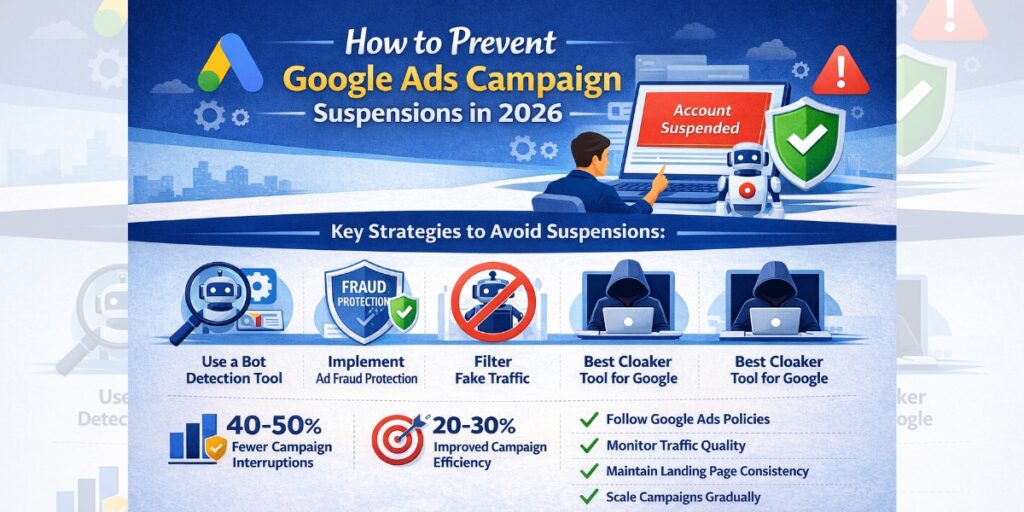
    Infographic showing strategies to prevent Google Ads campaign suspensions in 2026 using bot detection, ad fraud protection, and fake traffic filtering.

    Running successful campaigns on Google Ads is becoming more challenging every year. Industry reports suggest that nearly 25–35% of advertisers face at least one campaign suspension annually due to policy violations or suspicious traffic behavior. To reduce these risks and maintain stable advertising performance, many marketers now use advanced monitoring solutions like ClickStopper to analyze traffic quality and protect their campaigns.

    If you run affiliate campaigns, eCommerce ads, or lead generation campaigns, preventing suspensions should be a top priority. In 2026, Google’s advertising system relies on both automated algorithms and manual reviews to analyze ad copy, landing pages, and visitor activity. Advertisers who monitor traffic behavior and maintain compliance often experience 40–50% fewer campaign interruptions compared to those who ignore traffic monitoring.

    Understanding Why Google Ads Campaigns Get Suspended

    Google Ads continuously scans campaigns to ensure advertisements follow platform policies and provide a safe experience for users.

    Campaign suspensions often occur when the system detects warning signals such as:

    • Misleading or exaggerated claims in ads
    • Landing pages that do not match ad messaging
    • Suspicious redirects or hidden scripts
    • Unusual click patterns
    • High volumes of automated or low-quality traffic

    According to digital marketing studies, more than 20% of account reviews are triggered by abnormal traffic behavior, especially in competitive industries like finance, supplements, and affiliate marketing.

    Understanding these triggers allows advertisers to build safer campaigns and reduce suspension risks.

    The Growing Problem of Invalid Traffic

    Invalid traffic has become one of the biggest challenges in online advertising.

    Research indicates that 15–30% of all digital ad clicks globally may come from non-human sources, including bots, crawlers, and automated scanning tools. These bots often attempt to collect marketing data, analyze landing pages, or trigger automated ad interactions.

    Many automated visitors hide their identity using VPN services or rotating proxy networks. This allows bots to appear like real users and repeatedly interact with advertisements.

    When advertising platforms detect unusual click behavior or traffic spikes, campaigns may be flagged for review. Because of this, advertisers increasingly rely on strong ad fraud protection systems to monitor visitor activity and reduce suspicious traffic signals.

    The Importance of Traffic Monitoring

    Monitoring traffic quality plays a major role in preventing campaign suspensions.

    A reliable bot detection tool can analyze multiple visitor signals such as IP reputation, device behavior, and browsing patterns. By identifying suspicious activity early, advertisers can prevent automated visitors from interacting with their campaigns.

    Once abnormal activity is detected, systems apply bot traffic blocking to stop automated clicks from reaching landing pages. Advertisers who actively monitor traffic behavior often see 20–30% improvements in campaign efficiency, as fewer invalid clicks consume their advertising budgets.

    Using Traffic Filtering for Campaign Safety

    Traffic filtering is an important part of protecting advertising campaigns.

    A powerful fake traffic blocker for ads helps detect suspicious visitors before they reach sensitive landing pages. By filtering bots and automated scanners, advertisers reduce the risk of unusual activity patterns that could trigger platform reviews.

    This process also provides an additional layer of ad protection, helping campaigns run more consistently and preventing unexpected advertising interruptions.

    Advertisers who implement strong traffic filtering often experience up to 25% improvement in data accuracy, making campaign optimization easier.

    The Role of Advanced Traffic Segmentation

    In competitive advertising niches, marketers often use traffic segmentation strategies to control how visitors interact with landing pages.

    Many advertisers consider using the best cloaker tool for Google when they need stronger control over visitor access and campaign protection. These systems help separate automated traffic from real users and reduce exposure of sensitive landing pages to scanning tools.

    By implementing smart traffic segmentation strategies, advertisers can reduce suspicious traffic signals and improve long-term campaign stability.

    Additional Problems Caused by Bot Traffic

    Bot traffic can create several challenges for advertisers beyond wasted advertising spend.

    Budget Loss
    Automated clicks can consume 20–40% of an advertising budget without generating real leads or conversions.

    Distorted Analytics Data
    Invalid clicks make it difficult to measure real campaign performance.

    Higher Suspension Risk
    Unusual traffic patterns may trigger automated reviews by advertising platforms.

    Competitive Monitoring
    Spy tools and automated scanners may repeatedly visit landing pages to analyze campaigns.

    Lower Return on Investment
    When a large percentage of traffic is not real users, overall campaign profitability decreases significantly.

    Best Practices to Prevent Google Ads Campaign Suspensions

    Advertisers who want long-term campaign stability should follow several key strategies.

    Follow Advertising Policies
    Ensure that your ad copy and landing pages follow Google Ads guidelines.

    Maintain Landing Page Consistency
    The message in your advertisement should match the landing page content.

    Monitor Traffic Sources Regularly
    Analyzing visitor behavior helps detect suspicious activity early.

    Implement Traffic Protection
    Filtering invalid traffic reduces unusual activity signals.

    Scale Campaigns Gradually
    Sudden traffic spikes may trigger automated platform reviews.

  • TikTok Ads ROI Strategy 2026: How to Maximize Profits Safely

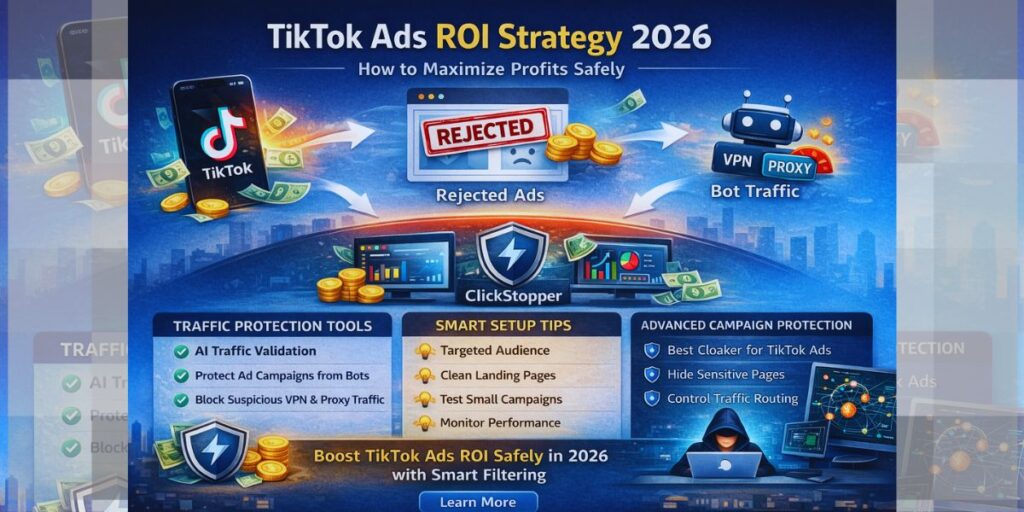
    TikTok Ads ROI Strategy 2026: How to Maximize Profits Safely

    tiktok ads roi strategy 2026

    Running TikTok advertising campaigns has become one of the fastest ways for marketers and affiliate advertisers to reach large audiences. However, many advertisers face challenges such as ad disapprovals, wasted budgets, and low-quality traffic. Without the right approach, it becomes difficult to maintain consistent campaign performance.

    A strong TikTok Ads ROI Strategy 2026 focuses on campaign safety, traffic quality, and smart optimization. When advertisers combine compliant ad creatives, targeted audiences, and modern traffic monitoring tools, they can increase profits while keeping campaigns stable.

    This guide explains how advertisers can maximize profits from TikTok ads safely while maintaining long-term campaign performance.

    Why TikTok Ads Require a Safe Strategy

    TikTok continues to grow rapidly as an advertising platform, but its review systems are also becoming stricter. Ads are automatically scanned for policy violations, misleading content, and suspicious activity.

    Affiliate marketers and performance advertisers often promote offers that operate in competitive niches. Because of this, campaigns need to be structured carefully to avoid risks like account restrictions or rejected ads.

    A profitable strategy usually includes:

    • Compliant ad creatives
    • Clean landing pages
    • High-quality traffic sources
    • Consistent campaign monitoring

    Advertisers who focus on these factors are more likely to maintain stable ad accounts and improve long-term ROI.

    How Traffic Quality Impacts TikTok Ads Performance

    One of the biggest hidden issues in digital advertising is poor traffic quality. Not every click comes from a real user. Automated bots, suspicious networks, and invalid clicks can quickly drain advertising budgets.

    In many cases, unusual traffic patterns may come from automated tools, VPN networks, or large proxy infrastructures that simulate user behavior. These visits rarely convert and can negatively impact campaign data.

    When campaigns receive too much invalid traffic, it becomes harder to analyze performance or optimize ads effectively.

    To solve this problem, many advertisers rely on advanced monitoring systems that use AI traffic validation to analyze visitor behavior and identify suspicious patterns.

    Improving traffic quality helps advertisers:

    • Reduce wasted ad spend
    • Improve conversion tracking accuracy
    • Increase campaign profitability
    • Maintain healthier advertising accounts

    Cleaner traffic almost always results in better ROI.

    Protecting Campaigns from Automated Traffic

    Automated traffic is one of the most common reasons campaigns lose efficiency. Bots and automated clicks can interact with ads repeatedly, creating misleading engagement signals.

    Because of this, many advertisers use systems designed to protect ad campaigns from bots before they impact performance metrics.

    Traffic filtering systems analyze patterns such as:

    • Repeated clicks from the same IP range
    • Unusual browsing behavior
    • Suspicious device activity
    • Traffic coming from automated sources

    These tools help advertisers maintain cleaner traffic and focus their budgets on real users who are more likely to convert.

    The Role of Traffic Monitoring Tools

    As competition increases, advertisers are turning to specialized solutions that help monitor traffic behavior and improve campaign protection.

    Tools like ClickStopper help advertisers analyze visitor activity, identify suspicious patterns, and maintain greater control over incoming traffic. These solutions can help detect unusual activity coming from networks that rely heavily on VPN services or large proxy clusters.

    Many marketers also explore solutions described as the Best Cloaker for TikTok Ads, which allow better management of how traffic is handled during advertising campaigns.

    These tools help advertisers gain deeper insights into campaign traffic while improving overall performance stability.

    Building a High-Performance TikTok Campaign

    Even with good traffic quality, a poorly structured campaign can struggle to deliver results. Advertisers should focus on building campaigns that are optimized for testing, learning, and scaling.

    Successful strategies often include:

    Start with smaller test campaigns
    Testing helps advertisers identify winning creatives and audiences before scaling.

    Use clear and transparent landing pages
    Landing pages should match the ad message and provide clear information to visitors.

    Apply accurate targeting
    Targeting specific regions, interests, and devices improves conversion rates.

    Monitor campaign data regularly
    Performance metrics should be reviewed frequently to identify trends and optimization opportunities.

    These steps allow advertisers to improve campaign efficiency and build stronger ROI over time.

    Common Mistakes That Reduce TikTok Ads ROI

    Many advertisers unknowingly reduce their profits by making avoidable mistakes. Identifying these early can significantly improve campaign performance.

    Some common mistakes include:

    • Scaling campaigns too quickly without testing
    • Using unreliable traffic sources
    • Ignoring TikTok advertising policies
    • Running ads with unclear landing pages
    • Failing to monitor traffic behavior

    Avoiding these issues allows advertisers to maintain more stable campaigns and better long-term results.

    Advanced Campaign Protection Methods

    Modern advertisers increasingly adopt smarter traffic management systems to control how users interact with their campaigns.

    Solutions often referred to as Best TikTok Ads Cloaking tools help manage traffic routing, visitor filtering, and campaign monitoring. These systems allow advertisers to maintain greater control over traffic behavior while protecting sensitive offers.

    Although no tool can guarantee perfect results, combining compliance with advanced traffic monitoring creates a much stronger campaign structure.

    Key Takeaways for TikTok Advertisers

    TikTok remains one of the most powerful advertising platforms, but success requires a careful and strategic approach. Campaign safety, traffic quality, and proper optimization are essential for maximizing profits.

    To build a successful TikTok advertising strategy in 2026:

    • Focus on high-quality traffic sources
    • Monitor visitor behavior regularly
    • Test campaigns before scaling budgets
    • Maintain clear and compliant landing pages
    • Use traffic filtering tools for better control

    With the right strategy and modern traffic monitoring solutions, advertisers can run stable campaigns and significantly improve their ROI while reducing unnecessary risks.

  • Why Meta Ads Get Disapproved in 2026 – And How Advertisers Can Reduce Risk

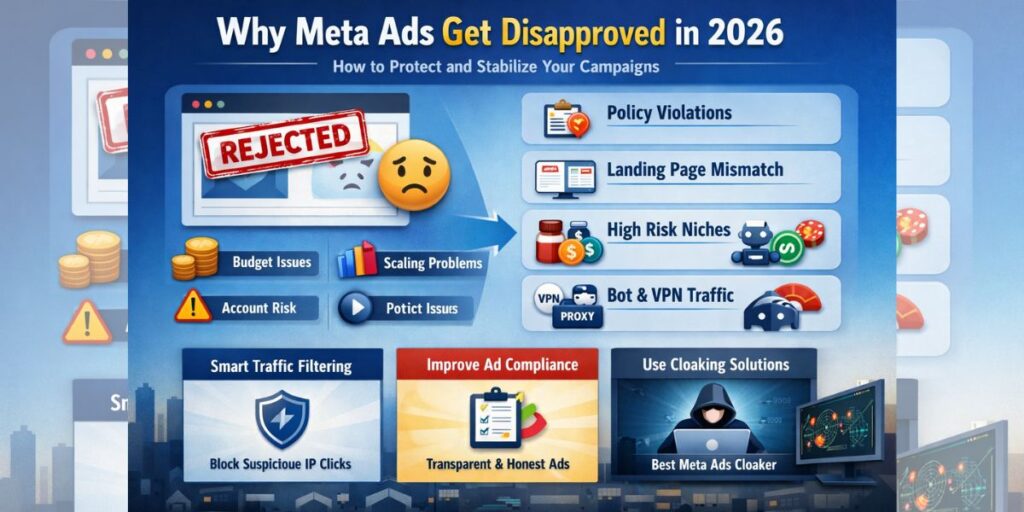
    Why Meta Ads Get Disapproved in 2026 – And How Advertisers Can Reduce Risk

    why meta ads get disapproved

    If you frequently receive the Meta Ads Disapproved notification, you are not alone. Many advertisers running campaigns on Meta platforms experience this challenge, especially when promoting competitive or sensitive offers.

    For affiliate marketers, agencies, and performance advertisers, repeated ad rejection can seriously impact campaign growth. When your ads are rejected multiple times, it affects campaign stability, slows down scaling, and increases account risk.

    Understanding why ads get rejected and how to prevent these issues is essential for maintaining long-term advertising success. In this guide, we explain the most common reasons behind Meta ads disapproval and practical steps advertisers can follow to reduce risk in 2026.

    Why Meta Ads Get Disapproved

    Before fixing the issue, it is important to understand the main causes behind ad rejection.

    1. Policy Violations

    Meta maintains strict advertising guidelines to protect users from misleading or harmful content. Even small mistakes in wording, exaggerated claims, or restricted categories can trigger an automatic rejection.

    Some industries that receive stricter review include:

    • Health and wellness products
    • Financial services
    • Crypto related offers
    • Affiliate marketing promotions

    If the ad copy makes unrealistic promises or lacks transparency, it can easily trigger a policy violation warning.

    2. Landing Page Mismatch

    Another major reason ads get rejected is when the ad message does not match the landing page content.

    For example, if an ad promises a specific offer or result but the landing page displays different information, the system may classify it as misleading. This often results in repeated ad disapproval alerts.

    Ensuring consistency between ad copy and landing page content is one of the simplest ways to reduce rejection risk.

    3. Automated Review System Detection

    Meta uses automated systems to scan advertisements and landing pages. These bots check for suspicious patterns, scripts, and redirect behavior.

    If the review system detects unusual activity such as hidden page content, multiple redirects, or suspicious technical setups, the ad can be rejected instantly.

    This is particularly common when advertisers run campaigns in high-risk niches.

    4. Sensitive or High-Risk Niches

    Certain industries face more strict review standards because they historically generate higher compliance issues.

    Some examples include:

    • Affiliate marketing
    • Nutra offers
    • IPTV services
    • Betting platforms
    • Financial products

    Even small compliance gaps in these niches can lead to ads being rejected more frequently.

    Common Reasons Advertisers Overlook

    Many advertisers focus only on ad copy, but several hidden factors can also cause rejection.

    Misleading Claims

    Ads that promise unrealistic outcomes or exaggerated results are often flagged during review. Before-and-after images, guaranteed results, or overly aggressive claims can trigger rejection.

    Restricted Content

    Some offers require additional approvals or special compliance steps. Running ads without understanding these restrictions can lead to repeated disapproval.

    Technical Redirect Issues

    Complex redirect systems or hidden scripts sometimes raise red flags during automated review. Even when the intent is not harmful, these setups can still cause detection.

    Missing Compliance Details

    Landing pages without proper business information, disclaimers, or transparency signals may appear suspicious to the review system.

    Practical Steps to Fix Meta Ads Disapproval

    If your ads are repeatedly rejected, follow a structured approach instead of making random edits.

    Review the Rejection Notice

    Always check the exact reason inside Ads Manager. Understanding the policy category helps you make precise corrections.

    Improve Landing Page Transparency

    Ensure the landing page clearly explains the offer, includes proper disclaimers, and matches the message used in the ad.

    Simplify the Ad Copy

    Avoid exaggerated claims and focus on simple, clear value statements. Transparency usually improves approval chances.

    Resubmit Carefully

    After making corrections, resubmit the ad and monitor the review process. Avoid making multiple rapid edits because this may trigger additional automated checks.

    Why Traffic Quality Matters in Meta Ads

    Another important factor many advertisers overlook is traffic quality.

    Suspicious traffic patterns, automated clicks, or repeated bot activity can sometimes trigger additional scrutiny during ad review. These behaviors may come from sources such as VPN traffic, automated bots, or Proxy networks that simulate user activity.

    Because of this, advertisers are increasingly adopting solutions that help filter and monitor traffic quality before it affects campaigns.

    Smart Traffic Filtering for Ad Campaigns

    Modern advertising environments require better control over traffic sources. One effective approach is implementing real time traffic filtering for ads.

    Traffic filtering systems help advertisers analyze visitor behavior and block harmful patterns before they cause problems.

    For example, filtering tools can:

    • block suspicious IP clicks that generate abnormal traffic behavior
    • detect automated traffic sources
    • reduce bot-generated interactions
    • help protect Meta ads from fake clicks

    These systems do not replace compliance, but they add an additional protection layer that helps advertisers maintain cleaner campaign data.

    How Click Filtering Helps Campaign Stability

    Many advertisers today combine compliance practices with advanced traffic monitoring tools.

    Solutions like Clickstopper help advertisers monitor incoming traffic and identify suspicious patterns early. By analyzing behavior signals and filtering low-quality visits, advertisers can maintain cleaner data and reduce unnecessary campaign risks.

    Filtering tools are particularly useful when running large-scale affiliate campaigns where traffic quality can vary significantly.

    Best Practices for Scaling Meta Ads Safely

    Once ads are approved, the focus should shift to maintaining stability.

    Advertisers who scale successfully usually follow these practices:

    • Keep ad messaging transparent
    • Maintain consistent landing page content
    • Avoid aggressive budget increases
    • Monitor traffic sources regularly
    • Track campaign performance data carefully

    Slow and stable scaling often performs better than rapid expansion that increases review risks.

    Building Long-Term Campaign Stability

    Advertising on Meta platforms continues to evolve, and the review system is becoming more sophisticated each year.

    Instead of searching for shortcuts, successful advertisers focus on three key areas:

    1. Policy compliance
    2. Transparent landing pages
    3. Clean and controlled traffic sources

    Some marketers also explore solutions often described as the Best meta Ads Cloaker, which combine filtering technology with traffic monitoring to help advertisers manage sensitive campaigns more carefully.

    While no tool can guarantee approvals, combining compliance with smarter traffic monitoring can significantly reduce rejection frequency.

  • Best Cloaker for Nutra Ads in 2026 – Protect Campaigns with ClickStopper

    Best Cloaker for Nutra Ads in 2026 – Protect Campaigns with ClickStopper

    best cloaker for nutra ads 2026 clickstopper

    Running advertising campaigns in the nutraceutical industry has always required careful planning, but as digital marketing evolves, the challenges are becoming even more complex. Stricter advertising policies, increasing competition, and the growing presence of fraudulent traffic have made campaign management far more difficult for marketers. As the industry moves toward more advanced monitoring systems, choosing the Best Cloaker for Nutra Ads in 2026 is becoming an essential step for advertisers who want to maintain stable and scalable campaigns.

    Nutraceutical marketing often operates in competitive environments where advertisers must ensure that their campaigns reach genuine users rather than automated systems or suspicious traffic sources. Poor traffic quality can significantly distort campaign data, making it harder for advertising platforms to optimize performance correctly.

    This is where ClickStopper provides a powerful advantage for advertisers who want better control over their campaign traffic.

    The Growing Problem of Invalid Traffic

    Digital advertising platforms rely heavily on data to determine how campaigns perform and how they should be optimized. When invalid traffic enters the system, the accuracy of this data becomes compromised. Automated bots, competitor clicks, and traffic from anonymized networks can all negatively impact campaign performance.

    A reliable bot detection tool helps advertisers identify unusual traffic behavior before it interferes with important performance metrics. By analyzing signals such as click timing, browsing patterns, device characteristics, and session activity, advanced detection systems can determine whether a visitor is behaving like a genuine user.

    Without this type of monitoring, advertising platforms may receive misleading signals that affect algorithm learning and campaign optimization.

    The Role of VPN and Proxy Traffic

    Another major challenge advertisers face today is the growing use of VPN services and Proxy networks. These technologies allow users to mask their real IP addresses and location information, which makes it difficult to identify the true source of traffic.

    While these tools can be used for legitimate purposes, they are also commonly associated with suspicious activity in advertising campaigns. Traffic routed through anonymous networks may originate from automated scripts, data centers, or individuals attempting to manipulate advertising metrics.

    When campaigns receive a large volume of masked traffic, advertisers often struggle to determine whether the visitors represent genuine potential customers. Filtering this type of traffic can help ensure that campaign data remains accurate and that advertising budgets are spent on real prospects.

    Why Cloaking Technology Matters

    Modern advertisers are increasingly using cloaking solutions to manage traffic quality more effectively. The best Cloaker tool allows marketers to analyze visitor signals and determine how different types of traffic should be handled.

    Instead of exposing the same landing page to every visitor, cloaking systems can segment traffic based on quality indicators. Legitimate users can be directed toward optimized offer pages, while suspicious or low-quality traffic may be restricted or redirected.

    This type of traffic management helps advertisers maintain better control over how their campaigns operate and how their landing pages are accessed.

    Many marketers also rely on the best Cloaker app to manage traffic filtering in real time. Advanced platforms monitor each incoming visitor and evaluate multiple data points before deciding whether the visitor should proceed through the marketing funnel.

    By making these decisions instantly, advertisers can maintain cleaner traffic streams while protecting important campaign assets.

    Protecting Advertising Budgets

    One of the biggest risks in digital advertising is the presence of invalid clicks. Bots, automated tools, and malicious actors can repeatedly interact with ads without any intention of converting. This activity wastes advertising budgets and creates inaccurate performance data.

    To maintain healthy campaigns, advertisers must actively filter fake clicks and bot traffic before it reaches sensitive landing pages or tracking systems.

    When fake traffic is removed from campaigns, advertising algorithms receive cleaner data. This allows platforms to optimize campaigns based on genuine user engagement instead of artificial signals generated by automated systems.

    Maintaining Campaign Stability

    Advertisers who actively protect ad campaigns from bots can significantly improve campaign reliability. Cleaner traffic means that conversion tracking becomes more accurate and optimization decisions become more predictable.

    Traffic filtering systems analyze every incoming visit and determine whethe r it meets quality standards. Suspicious users can be blocked or redirected while legitimate visitors continue through the normal conversion path.

    This approach helps maintain stable campaign performance and reduces the likelihood of unusual activity triggering platform reviews.

    Why ClickStopper Is a Smart Choice

    In a digital environment where advertising systems are becoming increasingly sophisticated, advertisers need tools that can adapt to changing challenges. Traditional filtering scripts and basic security measures are no longer enough to handle modern traffic threats.

    ClickStopper focuses on advanced traffic analysis and intelligent filtering to help advertisers maintain high-quality campaign traffic. By evaluating visitor signals continuously, the platform helps reduce exposure to suspicious activity while maintaining smooth experiences for legitimate users.

    For marketers operating in competitive niches like nutraceutical advertising, this level of protection provides a valuable layer of campaign security.

    Preparing for the Future of Digital Advertising

    As advertising platforms continue to improve their automated monitoring systems, traffic quality will play an even larger role in determining campaign success. Advertisers who prioritize clean traffic and reliable analytics will be better positioned to scale their campaigns without disruptions.

    Advanced traffic filtering solutions help marketers maintain control over their campaigns, reduce wasted ad spend, and improve data accuracy across multiple advertising platforms.

    With the right technology in place, advertisers can focus on optimizing their strategies and growing their campaigns rather than worrying about fraudulent traffic or misleading performance data.

    Click here for the- Best Cloaker for TikTok Ads

  • ClickStopper: Best Cloaking Tools in 2026 for Facebook Ads and Google Ads

    ClickStopper: Best Cloaking Tools in 2026 for Facebook Ads and Google Ads

    best cloaking tools in 2026 for facebook ads and google ads

    Running paid advertising on Facebook and Google in 2026 is more challenging than ever. AI-powered review systems now analyze traffic quality, user behavior, landing page compliance, and engagement patterns before approving or optimizing campaigns. Even top-performing ad creatives can underperform if the traffic driving them is low-quality or suspicious.

    This is where ClickStopper comes in. As a professional-grade cloaking tool, it helps advertisers maintain clean traffic, reduce ad disapprovals, and protect campaign budgets from click fraud and bots.

    Why Traffic Quality is Critical

    Modern advertising platforms are focused on delivering value to users. Suspicious clicks, automated traffic, or anonymized IP addresses can trigger manual reviews, stop campaigns, or even suspend accounts. Without proper traffic filtration, advertisers often face wasted budgets, distorted conversion tracking, and slow optimization cycles.

    Cloaking tools solve this problem by ensuring that only real users reach conversion-optimized pages. They act as an extra layer of protection, separating low-quality or high-risk traffic from legitimate visitors. This approach is especially useful for marketers looking for the best cloaker tool for Google or the best cloaker tool for Facebook, without violating platform rules.

    Protecting Campaigns from Bots and Fake Traffic

    Bots are one of the most common causes of wasted ad spend. They can generate fake impressions, clicks, or engagement, creating inaccurate data that misleads optimization algorithms. Using a strong bot detection tool allows advertisers to identify automated traffic before it interacts with landing pages or tracking pixels.

    Advanced bot filtering can also prevent repeated bot clicks from artificially inflating metrics. With intelligent bot traffic blocking, campaigns receive cleaner analytics and more accurate performance signals, making scaling safer and more predictable.

    Preventing Click Fraud and Budget Waste

    Click fraud is another serious threat. Malicious actors, competitors, or automated scripts can repeatedly click ads to exhaust budgets. Top cloaking tools incorporate click fraud prevention features, monitoring unusual patterns such as repeated clicks or abnormal interaction timing.

    This click fraud protection ensures that advertising dollars are spent on genuine users, helping marketers maintain ROI and campaign stability. Clean traffic allows ad platforms to optimize campaigns toward real human behavior rather than artificial interactions.

    Filtering Masked Traffic

    Many users attempt to conceal their identity using VPNs or proxy servers. These masked connections often generate low-quality engagement, triggering reviews or reducing campaign performance.

    Cloaking solutions include VPN blocking and proxy detection, allowing advertisers to prevent traffic from anonymous sources while focusing on legitimate users. By filtering masked traffic, campaigns maintain higher-quality leads and reduce wasted spend, which is particularly useful for competitive or high-risk niches.

    Real-Time Traffic Management

    One of the most important features of modern cloaking tools is real-time traffic filtering for ads. Every visitor is evaluated instantly, allowing suspicious traffic to be blocked or redirected before it reaches landing pages.

    This proactive approach also serves as a fake traffic blocker for ads, ensuring low-quality or automated visits don’t distort conversion data, click-through rates, or optimization learning. Real-time filtering gives advertisers complete control over traffic quality, enabling smarter decisions and safer scaling.

    Intelligent Traffic Segmentation

    Traffic cloaking enables segmentation, where high-risk or low-quality visitors are served neutral or safe pages while verified users see conversion-optimized offers. This improves compliance, data accuracy, and overall campaign performance.

    When implemented responsibly, cloaking becomes a strategic tool rather than a shortcut. Advertisers can protect sensitive pages, reduce review flags, and deliver the best possible user experience for qualified visitors.

    Comprehensive Ad Protection

    Top cloaking solutions combine multiple protections, including ad protection, bot protection, and ad fraud protection. Together with real-time filtering, these layers create a secure environment for campaigns, reducing the chances of disapproval or account suspension.

    Using a professional system also allows marketers to monitor traffic patterns, detect anomalies, and act proactively rather than reactively. This approach is critical for campaigns in competitive markets where even minor inefficiencies can significantly impact ROI.

    Who Should Use Cloaking Tools

    Cloaking tools are ideal for:

    • Affiliate marketers promoting high-risk offers
    • Media buyers managing multiple accounts
    • E-commerce brands optimizing multi-platform campaigns
    • Lead generation campaigns requiring high-quality traffic

    Advertisers seeking the best cloaker tool for Google or the best cloaker tool for Facebook benefit from these systems by maintaining clean traffic, accurate analytics, and stronger campaign stability.

    Future-Proofing Your Campaigns

    As AI-driven review systems become more sophisticated, traffic quality will be a deciding factor in campaign success. Marketers who use advanced cloaking techniques, including bot traffic blocking, click fraud protection, VPN blocking, and traffic cloaking, gain a measurable advantage.

    These tools help campaigns scale efficiently, maintain account health, and optimize for real human interactions. In 2026, using a professional cloaker is not just an advantage — it’s essential for sustained success on both Facebook and Google ads.

  • Best Cloaker for TikTok Ads in 2026

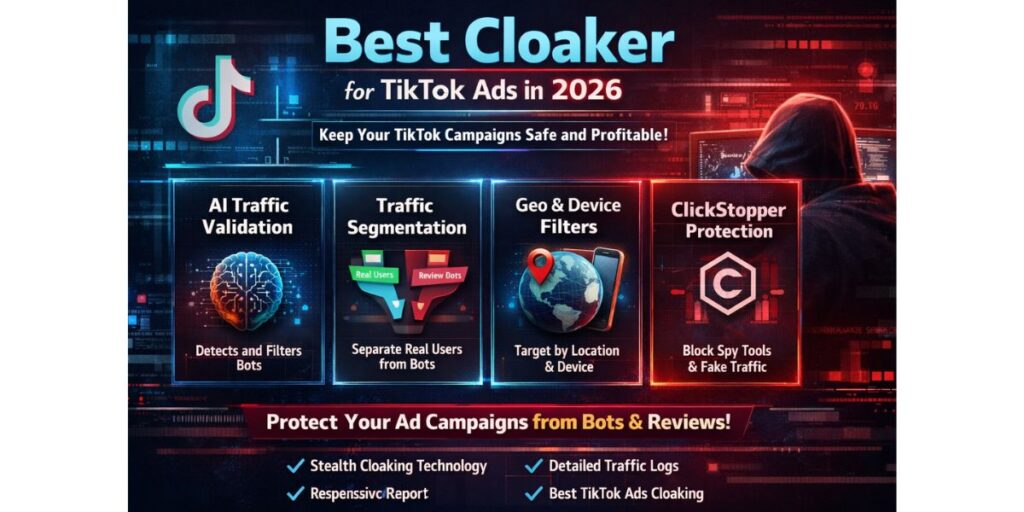
    Best Cloaker for TikTok Ads in 2026

    best cloaker for tiktok ads in 2026

    TikTok has become one of the most powerful platforms for online advertising. Businesses, affiliate marketers, and performance advertisers use TikTok Ads to reach massive audiences and generate large volumes of traffic. Because of this growth, many marketers are now searching for the Best Cloaker for TikTok Ads to maintain campaign stability and protect their advertising funnels from unnecessary risks.

    However, TikTok has also strengthened its ad review systems. Advanced moderation tools, automated crawlers, and human reviewers constantly scan ads and landing pages. Due to these strict checks, advertisers often face sudden ad disapprovals, limited campaign delivery, or even account restrictions.

    To manage these challenges, marketers focus on smarter traffic management strategies that help maintain campaign stability while filtering suspicious visits.

    Why Traffic Control Is Important for TikTok Ads

    When a TikTok campaign is active, the landing page can receive several types of traffic. Not all visitors are real users who are interested in the offer.

    Typical traffic sources may include:

    • Real users clicking the advertisement
    • Automated bots scanning the landing page
    • Platform review systems checking ad compliance
    • Competitor monitoring tools
    • Invalid or suspicious traffic

    If these visits are not controlled properly, automated scans can trigger repeated reviews and affect campaign performance. Because of this, many advertisers use modern filtering solutions designed to protect ad campaigns from bots and reduce the chances of unnecessary review signals.

    Features of a Reliable TikTok Ads Cloaking System

    A reliable traffic filtering solution focuses on analyzing visitor behavior and controlling access to landing pages. Instead of relying on simple redirects, advanced systems monitor multiple signals to identify suspicious traffic.

    Important capabilities include:

    Bot Detection
    Detecting automated bots and suspicious crawlers that analyze landing pages.

    Traffic Segmentation
    Separating real visitors from automated traffic sources.

    Geo and Device Filtering
    Controlling traffic based on location, device type, and operating system.

    Traffic Monitoring
    Providing detailed visitor logs and activity reports.

    Many marketers consider these features essential when choosing the best Cloaker tool for running stable advertising campaigns.

    How Advanced Traffic Filtering Works

    Modern advertising platforms rely on automated systems to analyze visitor behavior. To manage this environment effectively, advertisers often use intelligent traffic filtering technologies.

    One key technology used in these systems is AI traffic validation, which analyzes multiple signals to determine if a visitor is genuine or suspicious.

    These signals may include:

    • IP reputation and network type
    • Browser and device fingerprints
    • Traffic source indicators
    • User interaction patterns

    Additional methods such as VPN blocking and proxy detection help identify traffic that may come from anonymized networks or automated systems.

    By combining these detection techniques, advertisers can filter unusual traffic and maintain a more controlled campaign environment.

    Managing Visitor Access to Landing Pages

    After traffic is analyzed, advertisers can decide how visitors interact with their landing pages. In many setups, review traffic is directed to a compliant page designed for moderation systems, while real users are guided to the main marketing page.

    This approach is commonly known as traffic cloaking, which helps manage how different types of visitors access advertising funnels.

    Separating traffic in this way helps reduce unnecessary scans on sensitive pages and improves overall campaign stability.

    Smart Traffic Monitoring for Better Campaign Performance

    Advertisers who run large-scale campaigns often use specialized traffic management platforms such as ClickStopper to monitor visitor activity and control traffic quality.

    These systems provide detailed traffic logs, visitor analysis, and filtering rules that help marketers maintain better control over their advertising environment.

    Many professionals researching traffic management strategies often explore methods related to Best TikTok Ads Cloaking to better understand how advanced filtering techniques can improve campaign stability and performance.

    Best Practices for Running Stable TikTok Campaigns

    Even with advanced filtering systems, advertisers should follow responsible campaign practices to maintain long-term success.

    Some recommended practices include:

    • Use compliant ad creatives and landing pages
    • Monitor visitor activity regularly
    • Avoid frequent changes to ads or domains
    • Scale campaigns gradually
    • Maintain consistent campaign structures

    By combining proper campaign management with reliable traffic monitoring, advertisers can reduce risks and build more stable TikTok advertising campaigns.

  • Can You Use ClickStopper on WordPress and Shopify in 2026? 7 Powerful Reasons It Works

    Can You Use ClickStopper on WordPress and Shopify in 2026? 7 Powerful Reasons It Works

    clickstoper work with wordpress and shopify in 2026

    Online advertising is highly competitive in 2026. Companies using Shopify and WordPress for sponsored advertising need to safeguard every dollar spent. Because it helps stop budget wastage from invalid traffic, Click Stopper has grown in popularity. Website owners require dependable, automated protection measures as fraud techniques and bot intelligence advance.

    Why Click Fraud Is Rising Globally

    Click fraud has grown rapidly due to automation and global digital expansion. Fraudsters use:

    • Automated scripts
    • Bot networks
    • Competitor click attacks
    • VPN-based masking

    These activities inflate advertising costs and distort campaign data. When advertisers fail to filter fake clicks and bot traffic, they risk lower ROI and inaccurate performance metrics.

    Modern fraud is complex. Simple IP blocking is not enough. Businesses need intelligent systems that detect suspicious patterns before damage occurs.

    How Modern Fraud Detection Works

    Advanced fraud prevention platforms rely on artificial intelligence and behavioral tracking. Instead of focusing only on IP addresses, they analyze:

    • Click frequency
    • Session duration
    • Geographic behavior
    • Device fingerprinting
    • Engagement consistency

    This is why many companies consider advanced platforms the best click fraud tool for business operations in 2026.

    Real-Time Monitoring Explained

    For advertisements, modern systems rely on real time traffic filtering for ads. This implies that questionable activity is identified immediately as opposed to after budget loss. Advertisers can take action before campaigns suffer thanks to immediate detection.

    Risk Scoring Systems

    Each visitor’s behaviour is assessed by a sophisticated click fraud risk scoring tool. It uses danger signals to determine a score. Clean data can then be maintained by excluding high-risk traffic from campaigns.

    Automated Blocking Mechanisms

    Today’s technology can automatically block fake clicks without requiring manual intervention. Once abnormal behavior is confirmed, blocking happens in real time. This automation helps businesses stay efficient and protected.

    Using Click Stopper on WordPress

    WordPress remains the world’s most widely used website platform. Integration with fraud protection systems is simple and lightweight.

    Setup Process

    1. Install tracking script or plugin
    2. Connect advertising accounts
    3. Activate monitoring dashboard
    4. Review traffic reports

    The setup does not interfere with themes or website performance. Since WordPress sites often rely heavily on Google Ads, protection ensures higher data accuracy.

    Using Click Stopper on Shopify

    Shopify stores depend on paid traffic for sales growth. Because of this, they are frequent targets of invalid traffic.

    Integration Overview

    Shopify integration typically involves:

    • Adding tracking pixel
    • Linking ad accounts
    • Monitoring campaign sources

    For new online stores, investing in click fraud software for startups can be a game changer. Early-stage businesses often operate with limited budgets, so protecting every click is critical.

    Benefits for Startups

    Startups face unique challenges:

    • Limited marketing funds
    • High customer acquisition costs
    • Aggressive competition

    Fraud protection ensures campaign data remains clean. As a result, businesses can scale confidently and make smarter decisions.

    Enterprise-Level Advantages

    Larger companies managing multiple campaigns require scalable protection. Enterprise benefits include:

    • Multi-domain support
    • Cross-channel monitoring
    • Detailed reporting dashboards
    • Data transparency

    Such systems help maintain consistent campaign performance across regions and advertising networks.

    Performance & ROI Impact

    Filtering invalid traffic improves:

    • Conversion tracking accuracy
    • Cost-per-click efficiency
    • Return on ad spend
    • Audience targeting precision

    When advertising data becomes reliable, decision-making improves. Clean traffic equals stronger growth.

    Security & Compliance

    In 2026, privacy and data security standards remain a priority. Fraud prevention systems must comply with global data regulations such as GDPR. Responsible platforms encrypt user data and focus only on behavioral risk signals rather than personal information.

    Common Setup Mistakes

    Avoid these errors:

    • Ignoring traffic spikes
    • Failing to connect all ad accounts
    • Not reviewing fraud reports regularly
    • Relying solely on ad platform protection

    Proper configuration ensures maximum protection.

  • How Clickstopper Helps Stop Click Fraud in Google Ads

    How Clickstopper Helps Stop Click Fraud in Google Ads

    best google ads cloaker (2)

    Every year, digital advertising becomes more competitive, but it also faces a significant obstacle in the form of illegitimate traffic. Companies that spend money on sponsored advertising frequently find that competitors, automated scripts, and bots are using up some of their funds instead of actual clients. It is now important to comprehend how to stop click fraud in Google Ads in order to safeguard performance, data accuracy, and ROI.

    When automated programs or unauthorised users repeatedly click on advertisements without intending to convert, this is known as click fraud. These practices decrease campaign effectiveness, raise expenses, and skew data. Even a tiny portion of fake traffic can have a big effect on profitability for businesses that depend on paid acquisition. Because of this, sophisticated protection mechanisms are now an essential component of contemporary advertising campaigns.

    Real-time traffic pattern analysis is how an advanced fraud protection system operates. Prior to granting access to landing pages, it assesses user behaviour, IP reputation, device fingerprints, and engagement signals rather than responding after harm has been done. By taking this proactive stance, advertisers may instantly stop fraudulent clicks before they have an impact on their budgets. Campaigns stay focused on real prospects rather than bad actors by spotting suspicious traits early.

    A distorted reporting system is one of the most detrimental consequences of fraudulent traffic. Metrics like click-through rate, bounce rate, and conversion data become untrustworthy when phoney visitors engage with adverts. Poor optimisation decisions are frequently made when decisions are made based on erroneous data. In order to give businesses the information they need to scale successfully, dependable Google Ads bot traffic prevention makes sure that campaign data accurately reflect real user behaviour.

    Intelligent automation is another significant benefit of sophisticated filtering systems. Advertisers can use algorithm-driven models that continuously learn from new data in place of manually tracking traffic sources. In milliseconds, an efficient AI traffic filtering tool analyses thousands of micro-signals to find patterns that would be impossible to identify by hand. Machine learning maintains long-term resistance against emerging risks by adjusting to changing fraud strategies.

    Fraud prevention is not just about blocking obvious bots. Modern attackers use sophisticated methods such as residential proxies, rotating IP addresses, and simulated human interactions. Basic exclusion lists or manual IP blocking are no longer enough. Advanced systems incorporate behavioral analytics, anomaly detection, and risk scoring to distinguish real buyers from high-risk visitors. This deeper level of analysis is what separates basic monitoring software from the best click fraud tool for business environments where ad spend is substantial and performance consistency matters.

    Preserving the budget is just one aspect of the problem. Compliance and brand credibility are also crucial. Account restrictions or platform evaluations may be prompted by suspicious traffic patterns. Advertisers lower the risk of regulatory issues while preserving better account performance over time by removing negative interactions before they become more serious.

    Multi-platform protection is another crucial factor. Many businesses advertise across search engines and social networks simultaneously. Fraud does not limit itself to one channel. A comprehensive solution should also help protect Meta ads from fake clicks, ensuring consistent traffic quality across the entire digital marketing ecosystem. Unified protection allows teams to manage risk centrally instead of juggling multiple disconnected tools.

    Conversion rates are also increased via real-time detection. Engagement metrics improve and remarketing audiences get cleaner when genuine prospects are the main visitors to landing pages. Better lifetime value calculations, more intelligent bidding decisions, and better audience segmentation result from this. Advertisers create campaigns with precise foundations from the beginning rather than squandering money filtering data later.

    Scalability is still another crucial factor. Exposure to fake traffic frequently increases proportionately as companies boost daily expenses or extend advertising into new locations. Without more human labour, an automated defence system cannot grow. Fake click attempt blocking systems work continuously, adjusting to higher traffic levels without compromising detection precision.

    Transparency in reporting offers quantifiable benefits in addition to technological protection. Threat origins are shown by transparent dashboards that display restricted traffic, risk ratings, and source breakdowns. Marketing organisations may modify targeting tactics, weed out troublesome placements, and more effectively deploy budgets thanks to this visibility. Advertisers obtain actionable intelligence rather than speculating about waste locations.

    Preventing fraud has a significant long-term financial impact. Reducing invalid clicks increases overall marketing efficiency, stabilises campaign performance, and improves cost-per-acquisition. Significant annual savings can be achieved with even little improvements in traffic quality. More significantly, companies restore trust that their growth indicators are not based on fictitious activity but rather on actual demand.

    Reactive tactics alone are insufficient to protect ad expenditure in today’s digital market. It necessitates behavioural analytics, clever automation, and ongoing monitoring that changes in tandem with new threats. Advertisers establish a safe basis for long-term growth by including sophisticated fraud prevention in campaign workflows.

    In the end, focusing every dollar on actual potential clients is what makes paid advertising successful. Strong filtering systems save marketers from worrying about fraudulent traffic so they can concentrate on audience targeting, creative strategy, and optimisation. Effective protection turns sponsored advertising from risky investments into managed, ROI-driven growth engines.

  • How Clickstopper Maximizes Your ROI in 2026 with Smart Strategies

    How Clickstopper Maximizes Your ROI in 2026 with Smart Strategies

    best google ads cloaker

    In 2026, companies under greater pressure than ever to maximise every marketing investment. Businesses require more sophisticated tools and more astute tactics to remain profitable in the face of fierce internet competition and growing ad expenses. Platforms such as Clickstopper assist marketers in concentrating on actual users, preventing waste in campaigns, and enhancing overall performance through data-driven optimisation and intelligent automation. Businesses may now use advanced analytics to determine which efforts actually provide results and which ones quietly waste money, rather of speculating about what works.

    Invalid traffic is one of the main issues that digital advertisers are currently dealing with. On the surface, many ads seem effective because they get a lot of clicks, but a closer examination frequently shows that some of those interactions are not from actual potential buyers. Performance reports that are misleading can be produced by automated scripts, dubious sources, and low-quality traffic. Marketers run the danger of raising spending on efforts that don’t yield conversions or long-term value when they make decisions based on erroneous data.

    Many marketers use cutting-edge security tools, like the Best Google Ads Cloaker, to overcome this difficulty and make sure that ad campaigns reach real people while preserving campaign stability and compliance. Businesses can cut down on wasted impressions and better manage the usage of their marketing dollars by optimising the delivery and monitoring of advertisements. Stronger performance insights and more trustworthy data for upcoming campaign planning are the outcomes of this.

    The existence of spam clicks and bots that inflate campaign stats without generating genuine engagement is another issue that advertisers are becoming increasingly concerned about. In analytics dashboards, these automated interactions could appear to be valid activity, but they hardly ever result in significant activities like purchases or sign-ups. Because of this, companies could unintentionally spend too much money on advertisements that seem to be effective but actually bring in very little money. By shielding campaigns from these dangers, marketing teams may concentrate on connecting with actual consumers who are sincerely interested in their goods or services.

    Advanced click fraud traffic filtering systems are another tool used by contemporary marketers to track traffic patterns and spot questionable trends instantly. These solutions proactively stop invalid interactions from impacting advertising data, eliminating the need to wait until a campaign is over to evaluate performance. This proactive strategy increases overall advertising efficiency while preserving data accuracy. Businesses can improve their targeting tactics and allocate resources to channels that regularly yield quantifiable outcomes when they have access to trustworthy data about user behaviour.

    Filtering bot traffic and phoney clicks before they affect campaign effectiveness is another effective way to increase return on investment. Marketers may make sure that analytics data accurately depicts real user engagement by eliminating low-quality interactions at their origin. Better decision-making and more accurate campaign modifications result from this. With the assurance that their outcomes are derived from actual human behaviour rather than synthetic activity, businesses can test out various creatives, landing pages, and targeting techniques.

    Strong strategic planning is also necessary to maximise ROI in addition to traffic protection. Regular campaign performance reviews, user path analyses, and messaging refinements based on data from actual encounters are all necessary for businesses. Long-term success is largely dependent on continuous testing. Marketers may find out which combinations result in the highest engagement and conversion rates by testing with various ad formats, calls to action, and audience segmentation. These advancements build up over time, resulting in higher returns and more effective marketing.

    Another crucial component of contemporary digital marketing is automation. Large volumes of data can be analysed more quickly by sophisticated technologies than by any human team, revealing opportunities and trends that might otherwise go overlooked. Campaigns can instantly modify budget allocation, targeting criteria, and bids thanks to automated optimisation. This guarantees that marketing initiatives maintain their competitiveness despite the quick changes in the market. Routine chores can be automated, freeing up marketers to concentrate on long-term growth projects and innovative strategy.

    Maintaining a high return on investment requires both transparency and reporting. Accurately measuring success and tracking changes are made easier for teams by clear performance dashboards and comprehensive analytics reports. Businesses are better able to convey campaign results to stakeholders and make assured decisions on future investments when they have a clear understanding of how their efforts are performing. In addition to promoting responsibility, accurate reporting pushes marketing teams to continuously improve their tactics and aim for quantifiable results.

    Businesses that put efficiency, data accuracy, and real engagement first will differentiate themselves from the competition as digital marketing develops. Successful businesses put more effort into luring in long-term, valuable clients than they do into vanity metrics. Companies can safeguard their advertising expenditures while attaining steady expansion by integrating sophisticated monitoring systems, astute automation, and smart optimisation techniques.

  • Scaling Modern Teams With Accurate Data and Fraud Click and Traffic Filtering

    Scaling Modern Teams With Accurate Data and Fraud Click and Traffic Filtering

    Click Stopper helps with team management by making sure that leaders have the right information about performance and engagement before making decisions on growth and structure. When teams are scaled based on the right signals and not on deceptive activity, organisations grow with stability and confidence.

    Understanding Scalability in Team Management

    Scalable teams are built to be able to scale without descending into chaos. This means that the workflows are kept efficient, the communication channels are clear, and the performance levels are kept high even as the number of employees is increased. Scalability is the ability to meet increased demand without stressing the leadership or exhausting the employees. This requires the leadership to know how the teams work, not how they think they work. Accurate data is what is needed to build systems that can scale with the organisation.

    Data Accuracy as the Foundation of Strong Teams

    Why Clean Insights Matter for Leaders

    The managers of teams are increasingly using analytics for the assessment of productivity, teamwork, and overall health. AI traffic validation ensures that performance measures are not influenced by automated traffic but by human traffic. This enables the manager to make informed decisions. With the right information, managers are able to make decisions based on actual capacity shortages and actual output.

    Reducing Operational Noise at Scale

    Keeping Teams Focused on Real Work

    However, as the size of the organisations increases, the problem of operational noise becomes a challenge. Artificial interactions may cause noise in the reporting system, making the teams react to problems that don’t actually exist. The ability to filter false clicks and bots eliminates this noise before it impacts internal analysis. Managers can then focus on real productivity problems, improve collaboration, and direct resources to where they create the most value.

    Supporting Growth With Reliable Systems

    For teams to scale, they require systems that can scale along with them. Automation, analytics, and standardised processes are all useful in reducing human observation dependency. By incorporating bot traffic blocking into data streams, it is possible to ensure that these systems are accurate even when the usage increases. When reporting tools are accurate even when scaled up, it becomes possible for leaders to manage larger teams without losing control.

    Protecting Team Performance From External Manipulation

    Preserving the Integrity of Metrics

    As the organisation grows, it is more visible and susceptible to malicious click fraud. Fraud click protection is important to ensure that the metrics are not manipulated by malicious users. It is important to ensure that the decisions made by the management are reality-based and not based on manipulated metrics that could hamper growth.

    Building Teams Ready for Long-Term Growth

    Contemporary team management needs to be supported by tools that keep pace with the complexity of the organisation. Sophisticated bot detection software is an important component in ensuring that the operational data is clean, enabling managers to scale teams without having to compromise accuracy or trust.