
Why Meta Ads Get Disapproved in 2026 – And How Advertisers Can Reduce Risk
 admin
admin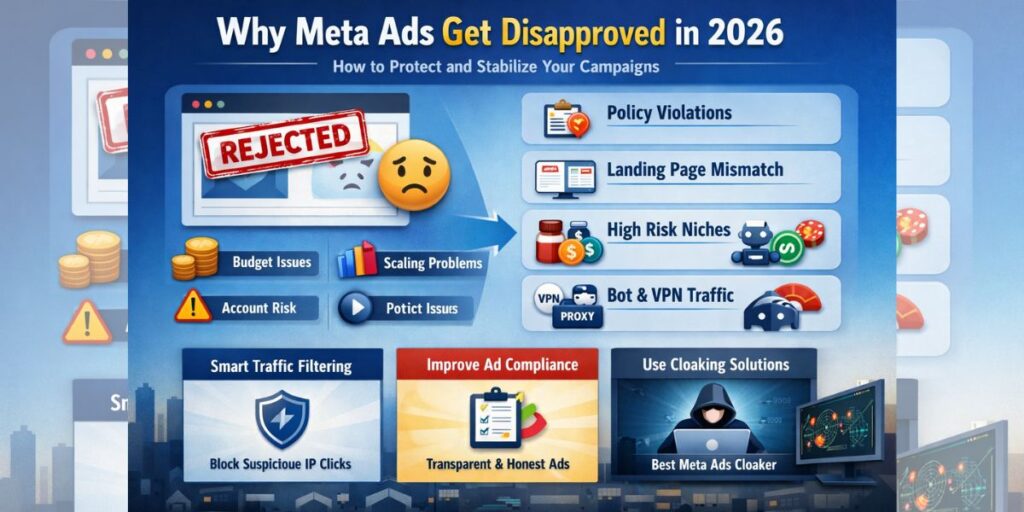
If you frequently receive the Meta Ads Disapproved notification, you are not alone. Many advertisers running campaigns on Meta platforms experience this challenge, especially when promoting competitive or sensitive offers.
For affiliate marketers, agencies, and performance advertisers, repeated ad rejection can seriously impact campaign growth. When your ads are rejected multiple times, it affects campaign stability, slows down scaling, and increases account risk.
Understanding why ads get rejected and how to prevent these issues is essential for maintaining long-term advertising success. In this guide, we explain the most common reasons behind Meta ads disapproval and practical steps advertisers can follow to reduce risk in 2026.
Why Meta Ads Get Disapproved
Before fixing the issue, it is important to understand the main causes behind ad rejection.
1. Policy Violations
Meta maintains strict advertising guidelines to protect users from misleading or harmful content. Even small mistakes in wording, exaggerated claims, or restricted categories can trigger an automatic rejection.
Some industries that receive stricter review include:
- Health and wellness products
- Financial services
- Crypto related offers
- Affiliate marketing promotions
If the ad copy makes unrealistic promises or lacks transparency, it can easily trigger a policy violation warning.
2. Landing Page Mismatch
Another major reason ads get rejected is when the ad message does not match the landing page content.
For example, if an ad promises a specific offer or result but the landing page displays different information, the system may classify it as misleading. This often results in repeated ad disapproval alerts.
Ensuring consistency between ad copy and landing page content is one of the simplest ways to reduce rejection risk.
3. Automated Review System Detection
Meta uses automated systems to scan advertisements and landing pages. These bots check for suspicious patterns, scripts, and redirect behavior.
If the review system detects unusual activity such as hidden page content, multiple redirects, or suspicious technical setups, the ad can be rejected instantly.
This is particularly common when advertisers run campaigns in high-risk niches.
4. Sensitive or High-Risk Niches
Certain industries face more strict review standards because they historically generate higher compliance issues.
Some examples include:
- Affiliate marketing
- Nutra offers
- IPTV services
- Betting platforms
- Financial products
Even small compliance gaps in these niches can lead to ads being rejected more frequently.
Common Reasons Advertisers Overlook
Many advertisers focus only on ad copy, but several hidden factors can also cause rejection.
Misleading Claims
Ads that promise unrealistic outcomes or exaggerated results are often flagged during review. Before-and-after images, guaranteed results, or overly aggressive claims can trigger rejection.
Restricted Content
Some offers require additional approvals or special compliance steps. Running ads without understanding these restrictions can lead to repeated disapproval.
Technical Redirect Issues
Complex redirect systems or hidden scripts sometimes raise red flags during automated review. Even when the intent is not harmful, these setups can still cause detection.
Missing Compliance Details
Landing pages without proper business information, disclaimers, or transparency signals may appear suspicious to the review system.
Practical Steps to Fix Meta Ads Disapproval
If your ads are repeatedly rejected, follow a structured approach instead of making random edits.
Review the Rejection Notice
Always check the exact reason inside Ads Manager. Understanding the policy category helps you make precise corrections.
Improve Landing Page Transparency
Ensure the landing page clearly explains the offer, includes proper disclaimers, and matches the message used in the ad.
Simplify the Ad Copy
Avoid exaggerated claims and focus on simple, clear value statements. Transparency usually improves approval chances.
Resubmit Carefully
After making corrections, resubmit the ad and monitor the review process. Avoid making multiple rapid edits because this may trigger additional automated checks.
Why Traffic Quality Matters in Meta Ads
Another important factor many advertisers overlook is traffic quality.
Suspicious traffic patterns, automated clicks, or repeated bot activity can sometimes trigger additional scrutiny during ad review. These behaviors may come from sources such as VPN traffic, automated bots, or Proxy networks that simulate user activity.
Because of this, advertisers are increasingly adopting solutions that help filter and monitor traffic quality before it affects campaigns.
Smart Traffic Filtering for Ad Campaigns
Modern advertising environments require better control over traffic sources. One effective approach is implementing real time traffic filtering for ads.
Traffic filtering systems help advertisers analyze visitor behavior and block harmful patterns before they cause problems.
For example, filtering tools can:
- block suspicious IP clicks that generate abnormal traffic behavior
- detect automated traffic sources
- reduce bot-generated interactions
- help protect Meta ads from fake clicks
These systems do not replace compliance, but they add an additional protection layer that helps advertisers maintain cleaner campaign data.
How Click Filtering Helps Campaign Stability
Many advertisers today combine compliance practices with advanced traffic monitoring tools.
Solutions like Clickstopper help advertisers monitor incoming traffic and identify suspicious patterns early. By analyzing behavior signals and filtering low-quality visits, advertisers can maintain cleaner data and reduce unnecessary campaign risks.
Filtering tools are particularly useful when running large-scale affiliate campaigns where traffic quality can vary significantly.
Best Practices for Scaling Meta Ads Safely
Once ads are approved, the focus should shift to maintaining stability.
Advertisers who scale successfully usually follow these practices:
- Keep ad messaging transparent
- Maintain consistent landing page content
- Avoid aggressive budget increases
- Monitor traffic sources regularly
- Track campaign performance data carefully
Slow and stable scaling often performs better than rapid expansion that increases review risks.
Building Long-Term Campaign Stability
Advertising on Meta platforms continues to evolve, and the review system is becoming more sophisticated each year.
Instead of searching for shortcuts, successful advertisers focus on three key areas:
- Policy compliance
- Transparent landing pages
- Clean and controlled traffic sources
Some marketers also explore solutions often described as the Best meta Ads Cloaker, which combine filtering technology with traffic monitoring to help advertisers manage sensitive campaigns more carefully.
While no tool can guarantee approvals, combining compliance with smarter traffic monitoring can significantly reduce rejection frequency.